Positive Reinforcement for Cat Training
Did you know that you can actually train a cat? They may not always be as eager to please as dogs, but they're intelligent and trainable. The secret is understanding their motivations and using positive reinforcement. Rewarding desired behaviors is the most effective and compassionate way to shape your cat's behavior and strengthen your bond. This guide will introduce you to the world of positive reinforcement and how to use it to train your feline friend.
Positive Reinforcement for Cat Training:

- Understanding Positive Reinforcement
- Choosing the Right Rewards: What Motivates Your Cat?
- Clicker Training: A Powerful Tool
- Target Training: Guiding Your Cat's Movements
- Shaping Behavior: Step-by-Step Success
- Teaching Common Commands and Behaviors
- Consistency and Patience: Keys to Success
- Addressing Challenges: Troubleshooting Tips
Understanding Positive Reinforcement:
Positive reinforcement is a training method based on rewarding desired behaviors to make them more likely to occur in the future. It's a humane and effective way to train cats because:
- It's Positive: Positive reinforcement focuses on rewarding good behavior, rather than punishing bad behavior. This creates a more positive and trusting relationship between you and your cat.
- It's Effective: Cats are more likely to repeat behaviors that are rewarded.
- It's Fun: Positive reinforcement training can be a fun and engaging activity for both you and your cat.
- Redirection: Helps redirect unwanted behaviors to more acceptable alternatives.
Choosing the Right Rewards: What Motivates Your Cat?
The key to successful positive reinforcement training is to find out what motivates your cat. Common rewards include:
- Treats: Small, tasty treats are a popular reward for cats.
- Praise: Some cats respond well to verbal praise and petting.
- Toys: Toys can be used as rewards, especially for cats who enjoy playing.
- Attention: For some cats, simply giving them attention can be a reward.
Experiment with different rewards to see what works best for your cat.

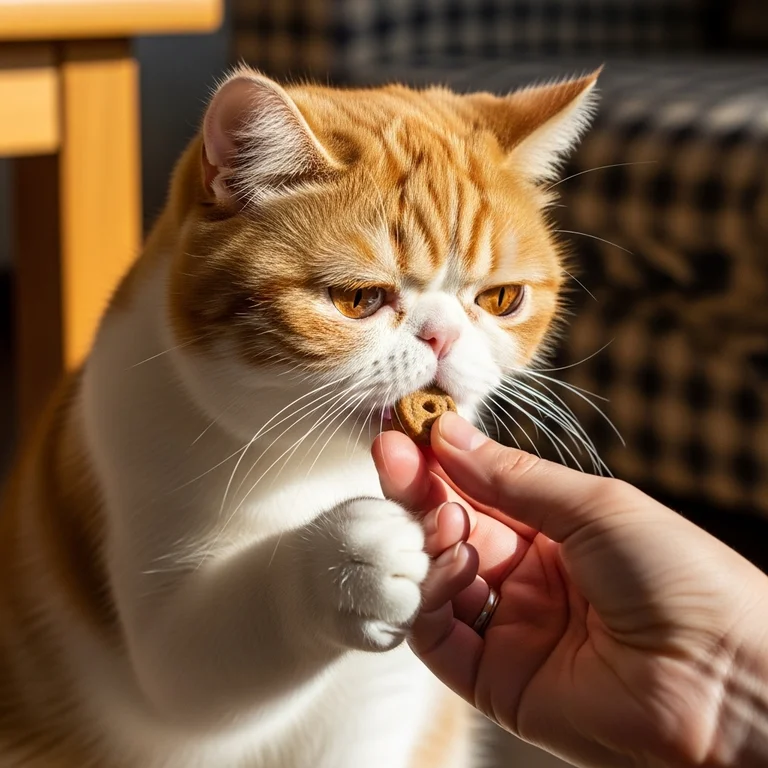
Clicker Training: A Powerful Tool
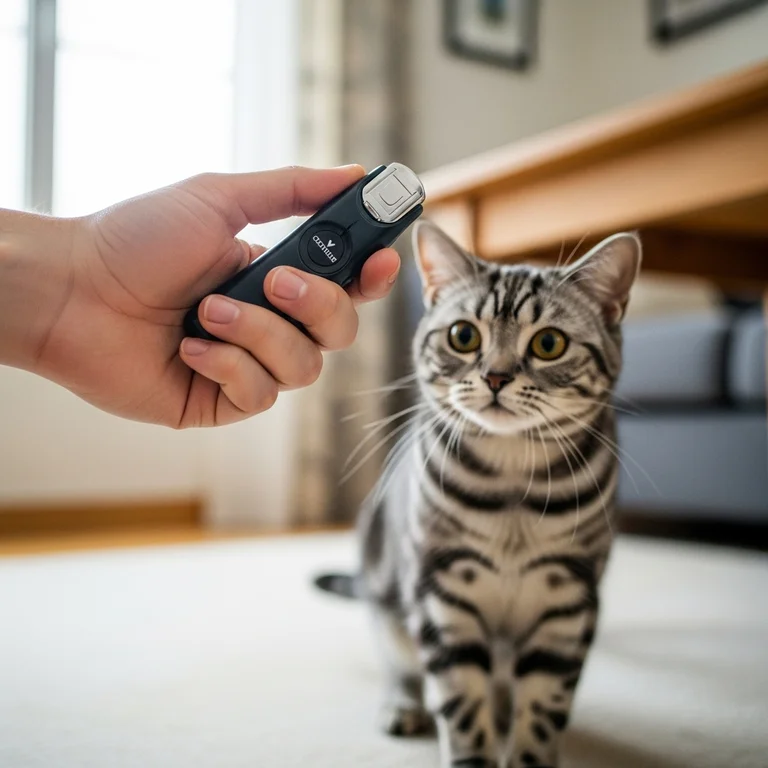
Clicker training is a form of positive reinforcement that uses a clicker to mark the exact moment your cat performs the desired behavior. The clicker sound becomes associated with a reward, making it a powerful communication tool.
- How it Works: First, you need to associate the clicker with a reward by clicking and then immediately giving your cat a treat. Repeat this several times until your cat understands that the clicker means a reward is coming.
- Timing is Key: Click the clicker at the exact moment your cat performs the desired behavior.
- Consistency: Always follow the click with a reward.
Target Training: Guiding Your Cat's Movements
Target training involves using a target (such as a chopstick or a pen) to guide your cat's movements. This can be used to teach your cat to go to a specific location or perform a specific action.
- Introduce the Target: Hold the target out and reward your cat for approaching it.
- Guide Your Cat: Use the target to guide your cat to the desired location or action.
- Reward: Reward your cat for following the target.
Shaping Behavior: Step-by-Step Success
Shaping involves breaking down a complex behavior into smaller, more manageable steps and rewarding your cat for each step.
- Start Small: Begin by rewarding any behavior that is even remotely close to the desired behavior.
- Gradually Increase Expectations: As your cat progresses, gradually increase your expectations.
- Be Patient: Shaping can take time, so be patient and consistent.

Teaching Common Commands and Behaviors
Positive reinforcement can be used to teach your cat a variety of commands and behaviors, such as:
- Come: Use a clicker and reward when the cat comes towards you.
- Sit: Use target training to lure the cat into a sit, then click and reward.
- Stay: Start with short durations, gradually increasing the time.
- Go to Your Mat: Use target training to guide your cat to a mat, then click and reward.
Consistency and Patience: Keys to Success
Consistency and patience are essential for successful positive reinforcement training.
- Be Consistent: Use the same commands and rewards every time.
- Be Patient: It takes time for cats to learn new behaviors, so be patient and don't get discouraged.
- Keep Sessions Short: Short, frequent training sessions are more effective than long, infrequent ones.
Addressing Challenges: Troubleshooting Tips
If you're having trouble with positive reinforcement training, here are some troubleshooting tips:
- Not Motivated by Rewards: Experiment with different rewards to find something that your cat finds motivating.
- Losing Interest: Keep training sessions short and fun to prevent your cat from losing interest.
- Inconsistent Behavior: Make sure you're being consistent with your commands and rewards.
- Medical Issues: Consult your vet to rule out medical issues if the cat is suddenly unable to perform previously learned tasks.
With patience, consistency, and a little creativity, you can use positive reinforcement to train your cat and strengthen your bond. Enjoy the process, and the positive impact it will have on your cat, and yourself!
Find a cat companion with our quick, fun quiz!
Match me