Plants that are harmful to Cats
Cats can be sensitive to various common household and garden plants, and ingesting or coming into contact with certain plants can lead to a range of symptoms from mild irritation to severe poisoning and, in some cases, can be fatal. Discover the plants harmful to cats in this easy guide. As a Cat owner, you need to be aware of these potential dangers to ensure a safe environment for your lovely little feline companions.
Plants harmful to Cats:

- Common Toxic Household Plants
- Common Toxic Garden Plants
- What to Do If You Suspect Poisoning
- Further Reference
Below is a list of some of the most commonly cited plants that are toxic to domestic cats. This list is not exhaustive, but it covers many of the plants frequently encountered in homes and gardens.
Common Toxic Household Plants
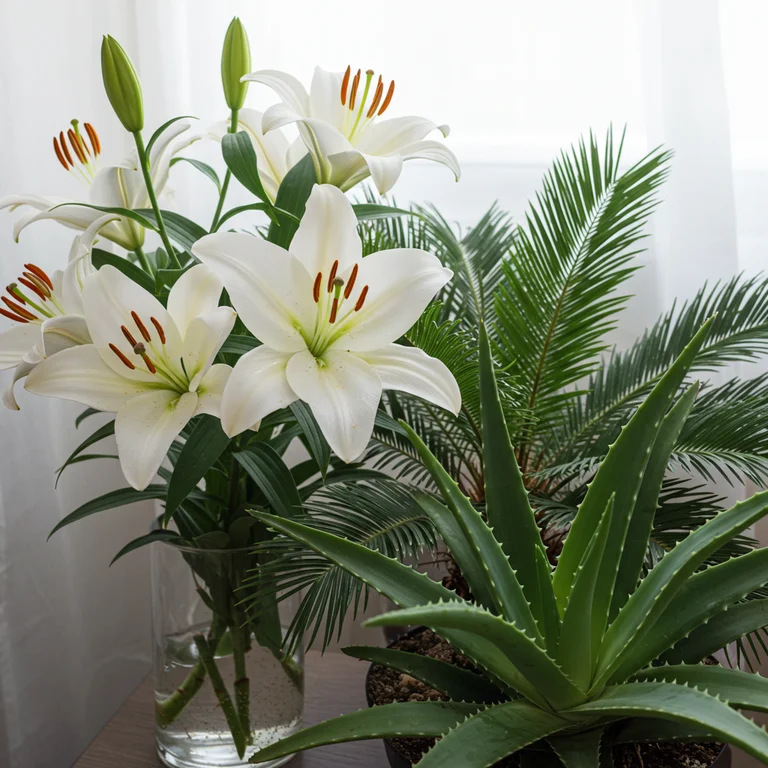
- Lilies (Lilium species and Hemerocallis species): ALL parts of lilies, including pollen and vase water, are extremely toxic to cats and can cause kidney failure. This includes popular varieties like Easter Lilies, Tiger Lilies, Daylilies, Asiatic Lilies, Stargazer Lilies, and Rubrum Lilies.
- Aloe Vera (Aloe barbadensis miller): While known for its medicinal properties for humans, it can cause vomiting, diarrhea, and lethargy in cats.
- Amaryllis (Amaryllis spp.): The bulbs are particularly toxic, but all parts can cause vomiting, depression, diarrhea, abdominal pain, hypersalivation, anorexia, and tremors.
- Arrowhead Vine (Syngonium podophyllum): Can cause oral irritation, pain and swelling of the mouth, tongue, and lips, excessive drooling, vomiting, and difficulty swallowing.
- Asparagus Fern (Asparagus setaceus): Can cause allergic dermatitis with repeated dermal exposure. Ingestion can cause gastrointestinal upset (vomiting, diarrhea).
- Caladium (Caladium hortulanum): Can cause burning and irritation of the mouth, tongue, and lips, excessive drooling, vomiting, and difficulty swallowing.
- Chinese Evergreen (Aglaonema modestum): Can cause oral irritation, pain and swelling of the mouth, tongue, and lips, excessive drooling, vomiting, and difficulty swallowing.
- Corn Plant/Dragon Tree (Dracaena fragrans): Can cause vomiting (sometimes with blood), depression, anorexia, hypersalivation, and dilated pupils in cats.
- Cyclamen (Cyclamen spp.): The tubers or rhizomes contain the highest concentration of toxic saponins and can cause significant gastrointestinal irritation, including intense vomiting. Fatalities have also been reported.
- Dieffenbachia (Dumb Cane): Can cause intense oral irritation, pain and swelling of the mouth, tongue, and lips, excessive drooling, vomiting, and difficulty swallowing.
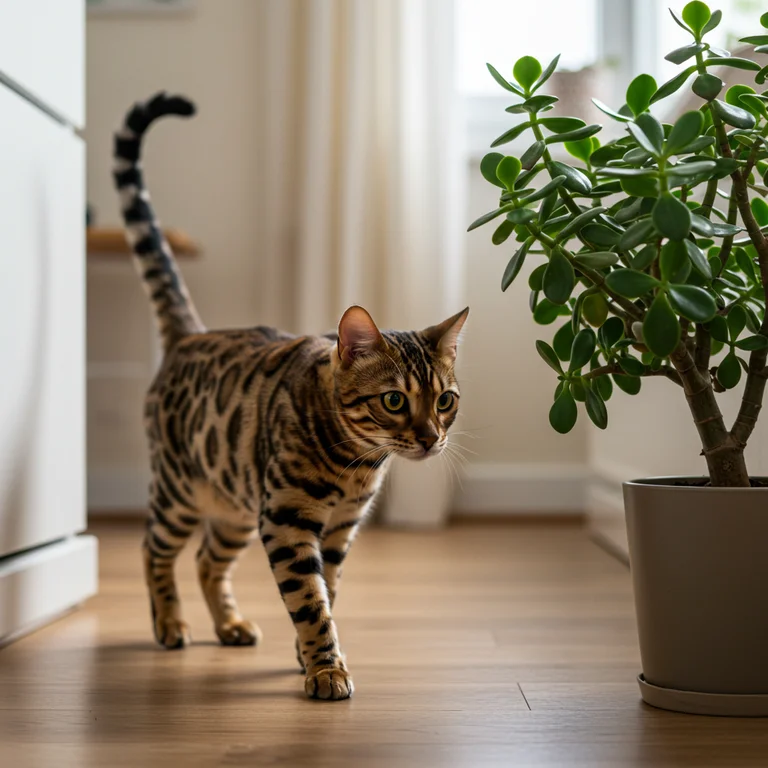
- Jade Plant (Crassula ovata): Can cause vomiting, depression, ataxia (incoordination), and bradycardia (slow heart rate) in cats.
- Kalanchoe (Kalanchoe spp.): Can cause vomiting and diarrhea. In rare cases, abnormal heart rhythms can occur.
- Peace Lily (Spathiphyllum spp.): Contains calcium oxalate crystals that can cause oral irritation, pain and swelling of the mouth, tongue and lips, excessive drooling, vomiting, and difficulty swallowing.
- Philodendron (Philodendron spp.): Can cause oral irritation, pain and swelling of the mouth, tongue, and lips, excessive drooling, vomiting, and difficulty swallowing.
- Poinsettia (Euphorbia pulcherrima): While its toxicity is often exaggerated, it can cause irritation to the mouth and stomach, sometimes resulting in mild vomiting or drooling.
- Pothos/Devil's Ivy (Epipremnum aureum): Can cause oral irritation, pain and swelling of the mouth, tongue, and lips, excessive drooling, vomiting, and difficulty swallowing.
- Rubber Plant (Ficus elastica): Can cause mild oral and gastrointestinal irritation.
- Sago Palm (Cycas revoluta): All parts are highly toxic, especially the seeds. Ingestion can cause severe vomiting, bloody stools, jaundice, increased thirst, hemorrhagic gastroenteritis, bruising, liver damage, liver failure, and death.
- Snake Plant/Mother-in-Law's Tongue (Sansevieria trifasciata): Can cause nausea, vomiting, and diarrhea.
- Tradescantia (Wandering Jew): Can cause dermatitis (skin irritation) and mild gastrointestinal upset.
Common Toxic Garden Plants
- Autumn Crocus (Colchicum autumnale): Highly toxic and can cause severe oral irritation, bloody vomiting, diarrhea, shock, multi-organ damage, and bone marrow suppression.
- Azaleas and Rhododendrons (Rhododendron spp.): Contain grayanotoxins which can lead to vomiting, diarrhea, weakness, cardiac problems (arrhythmias, hypotension), tremors, seizures, coma, and can be fatal.
- Castor Bean (Ricinus communis): Contains ricin, a highly toxic substance. Ingestion can cause severe abdominal pain, drooling, vomiting, diarrhea, excessive thirst, weakness, and loss of appetite. Severe cases can lead to dehydration, muscle twitching, tremors, seizures, coma, and death.
- Chrysanthemum (Chrysanthemum spp.): Can cause vomiting, diarrhea, hypersalivation, incoordination, and dermatitis.
- Daffodils (Narcissus spp.): The bulbs are the most toxic part. Ingestion can cause severe vomiting, diarrhea, abdominal pain, and potentially cardiac arrhythmias or respiratory depression.
- Delphinium/Larkspur (Delphinium spp.): Can cause digestive upset, nervousness, depression, and in high doses, cardiac failure or respiratory paralysis.
- English Ivy (Hedera helix): The foliage is more toxic than the berries. Can cause vomiting, abdominal pain, hypersalivation, and diarrhea.
- Foxglove (Digitalis purpurea): Contains cardiac glycosides which can cause cardiac arrhythmias, vomiting, diarrhea, weakness, heart failure, and death.
- Hyacinth (Hyacinthus orientalis): Bulbs are the most toxic part. Can cause intense vomiting, diarrhea (sometimes bloody), depression, and tremors.
- Hydrangea (Hydrangea spp.): Contains cyanogenic glycosides. Can cause vomiting, diarrhea, and depression.
- Iris and Gladioli (Iridaceae family): Bulbs are the most toxic part. Can cause vomiting, diarrhea, drooling, and lethargy.
- Juniper (Juniperus spp.): Berries, needles, and stems can cause gastrointestinal upset, and in large quantities, kidney problems.
- Lily of the Valley (Convallaria majalis): Contains cardiac glycosides and can cause vomiting, diarrhea, slowed heart rate, severe cardiac arrhythmias, and seizures.
- Marijuana (Cannabis sativa): Ingestion can lead to incoordination, lethargy, dilated pupils, drooling, vomiting, tremors, and in severe cases, seizures and coma.
- Nicotiana/Flowering Tobacco (Nicotiana spp.): Contains nicotine. Can cause severe gastrointestinal upset, agitation, tremors, increased heart rate, respiratory distress, and potentially death.
- Oleander (Nerium oleander): All parts are highly toxic, containing cardiac glycosides. Can cause severe vomiting, drooling, abdominal pain, diarrhea (possibly bloody), incoordination, tremors, cardiac failure, and death.
- Rhubarb (Rheum rhabarbarum): The leaves contain soluble oxalate crystals and can cause kidney failure, tremors, and salivation.
- Tomato Plant (Solanum lycopersicum): Green parts of the plant (stems, leaves, unripe fruit) contain solanine, which can cause gastrointestinal upset, lethargy, and weakness. Ripe fruit is generally considered safe.
- Tulips (Tulipa spp.): The bulbs have the highest concentration of allergenic lactones. Can cause intense gastrointestinal irritation, drooling, loss of appetite, depression of the central nervous system, convulsions, and cardiac abnormalities.
- Yew (Taxus spp.): All parts, especially the needles and seeds, are highly toxic and contain taxines, which can cause sudden cardiac failure leading to death. Other signs include tremors, difficulty breathing, and vomiting.

What to Do If You Suspect Poisoning
- Immediately remove your cat from the plant.
- Do not induce vomiting unless specifically instructed to do so by a veterinarian.
- Identify the plant if possible. Take a sample or a photo of the plant with you.
- Contact your veterinarian or an animal poison control center immediately. They can provide guidance on the next steps.
Further Reference
For a comprehensive and searchable database of plants toxic and non-toxic to cats, a reliable external source is the
ASPCA (American Society for the Prevention of Cruelty to Animals)
.
Their website offers an extensive list:
It's always best to be cautious and keep potentially toxic plants out of reach of your cats, or choose only plants known to be safe for felines.
Read our Blog post on
Find a cat companion with our quick, fun quiz!
Match me